
Why You Almost Always Pay More Than You Should (And How to Fix It)
By Chris Nzouat · 2026-05-10 · Price Intelligence
Stop overpaying on purchases! Discover the structural reasons you spend more than you should when shopping. CartLens provides the ground-truth price data to help you save significantly.
You walked out of the store. You spent what you spent. And somewhere in the back of your mind, a question surfaced that you couldn't answer: was that a fair price?
Most people can't answer that question. Not because they're careless, but because the information to answer it has never been available at the moment it matters — the moment of purchase.
This is not an accident.
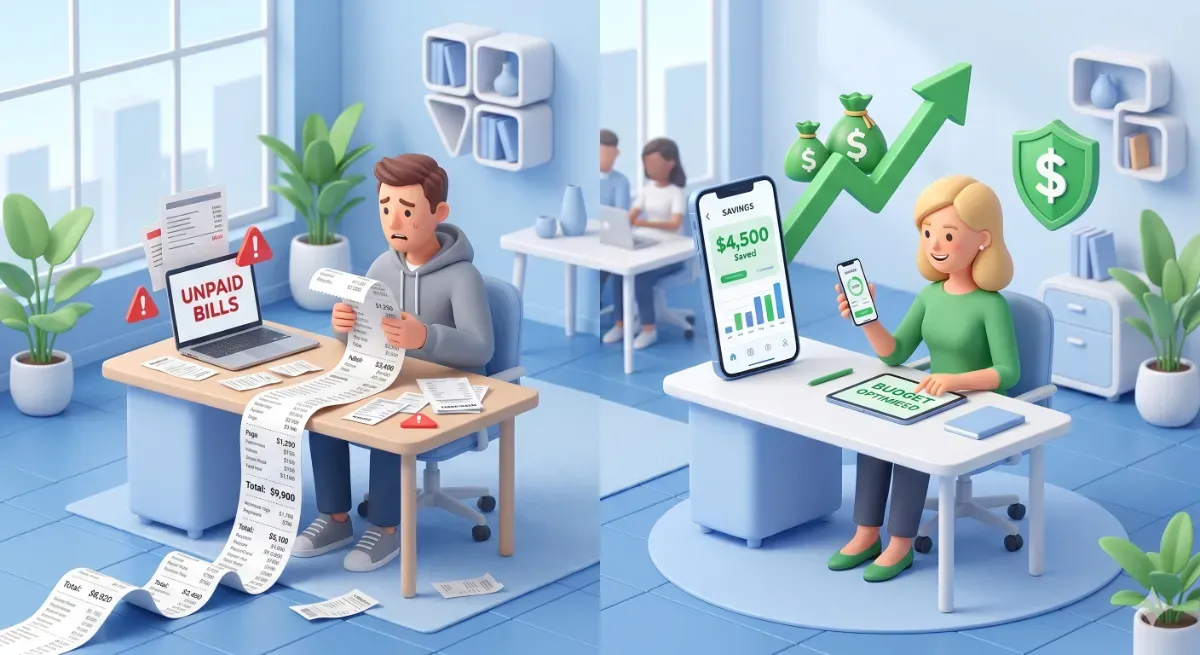
The Information Gap Is Built In
Retailers spend significant resources on pricing strategy. They hire yield management teams, run dynamic pricing algorithms, and test price elasticity across regions. The result is a pricing environment that is extraordinarily sophisticated on the seller's side and almost completely opaque on the buyer's side.
You walk into a store with no independent reference point. You see a price tag. You make a judgment call based on memory, gut feeling, or nothing at all. The store knows exactly what that item costs across 200 competitors. You do not.
The FTC Grocery Supply Chain Report illustrates how supplier leverage, market structure, and disruptions can shape what shoppers ultimately pay.
What Overpaying Actually Costs
The average household in the United States spends approximately $5,700 per year on grocery purchases alone. Studies consistently show why store prices vary by location, with identical products varying between 20% and 40% in price across stores within the same city, same neighborhood — sometimes within a few blocks of each other.
Extend that across every retail category — pharmacy, electronics, hardware, apparel, personal care — and the gap compounds. NBER research on retail price dispersion documents substantial differences in prices for identical goods. Across a household's annual purchases, repeatedly paying above the local market floor can create meaningful spending leakage.
That's not carelessness. That's a structural disadvantage.
The Old Coping Mechanisms Don't Work
People have tried to solve this problem in a few ways. None of them work well.
Loyalty to one store. This makes you predictable and gives you no leverage. Your loyalty is valuable to the store because it prevents you from discovering competitors' prices.
Manual price comparison. Driving to three stores before making a purchase costs more in time and fuel than the savings justify, for most people, for most purchases.
Cashback apps and coupon clipping. While popular, many apps like Ibotta apply a discount to a price that may already be inflated. You can get 15% off and still overpay relative to the market floor.
Delivery app comparisons. Delivery platform prices are not the same as in-store prices. They're marked up, sometimes substantially, and reflect a completely different supply and margin structure. They don't tell you what's happening at physical retail.
The fundamental problem is that none of these approaches give you a ground-truth price reference at the physical point of purchase.
What a Ground-Truth Price Reference Looks Like
A real price reference requires real data from real physical transactions. Not web scraping. Not delivery platforms. Not manufacturer suggested retail prices.
It requires knowing what people actually paid — at the register, for that specific product, at stores near you, recently.
This is the core insight behind the Geospatial Lattice: a crowdsourced price index built from real receipts and price tags, scanned by real shoppers across every retail category. Every scan adds a verified data point. Every verified data point makes the index more accurate for every user within range.
The result is a living, GPS-verified record of what things actually cost near you — updated continuously by the community of people using it.
How the Verdict Works
When you scan a receipt or a price tag with CartLens, the system doesn't just file the information away. It runs it against the Lattice: every comparable price record for that product, within your radius, weighted by recency.
The output is a verdict. Not a suggestion. Not an estimate. A verdict: did you pay a fair price, or did you overpay — and if you overpaid, where nearby is cheaper right now?
This works across every retail category. Grocery. Pharmacy. Electronics. Hardware. Apparel. The Lattice doesn't care what kind of store you're in. It cares what you paid and whether that price holds up against the ground truth.
The Structural Fix
The reason most people overpay isn't that they don't care about prices. It's that the infrastructure to make informed decisions at the point of purchase—like the price tracking app—has never existed before.
Every time someone scans a receipt, they make the Lattice smarter — not just for themselves, but for every shopper in their area. This is the compounding dynamic that makes crowdsourced price intelligence fundamentally different from any individual-level tool.
You stop guessing. You start knowing.
Frequently Asked Questions
How much do prices actually vary between stores?
For identical products in the same city, price differences of 20–40% between stores are common. In categories like pharmacy and electronics, variance can exceed 50%. The difference depends on the product, the city, and the competitive density of the area.
Does this work for stores other than grocery?
Yes. CartLens works across any retail category — grocery, pharmacy, electronics, hardware, apparel, and more. The Geospatial Lattice indexes prices across all physical retail, not just food.
How do I know if the price data is accurate?
The Lattice is built from real scanned receipts and price tags — not web scrapers or delivery apps. Data points are GPS-verified, timestamped, and weighted by recency. If you wonder are price tracker apps accurate, this crowdsourced method is the key. The more people scan in your area, the more precise the verdicts become.
What does CartLens do with my receipt data?
CartLens operates under the Sovereign Protocol: your data is yours. You can opt in or out of anonymous Lattice contribution, export your data as JSON at any time, and your account data is fully purged upon deletion.
Lebo: overpaying, save money, price intelligence, shopping tips, fair price, consumer spending, price data, CartLens